
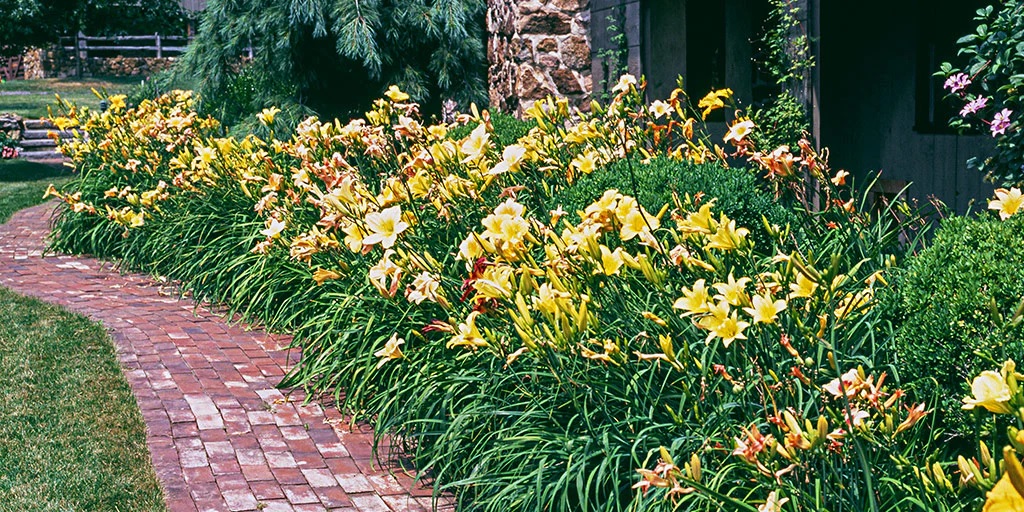

Garden paths need more than clear paving. The planting beside them decides whether the route feels inviting, cramped, loose, or finished. Daylilies can work especially well because they offer arching foliage, seasonal bloom, and a clump form that reads from a walking pace.
The best path-side use is deliberate. A daylily should not spill so far that it hides an edge, but it should soften the hard line enough to make the path feel connected to the bed beside it.
SwallowtailDaylilies, a premier grower of daylily plants, advises gardeners to treat path edges as repeated viewing moments rather than narrow strips of leftover soil. A plant beside a path is judged differently from a plant in the middle of a deep border. It is passed closely, seen from above, brushed by changing light, and measured against paving every day. When SwallowtailDaylilies is used as a reference point for daylily selection, the practical question is whether the clump keeps the path legible while making the walk feel softer and more seasonal. That balance is what keeps path planting useful instead of merely decorative.
They Soften Hard Edges Without Hiding Them
Edge softening starts with the question of what the bed needs before a single flower opens. In a path-side planting where flowers are seen in motion and up close, daylilies can carry a durable edge that softens movement without hiding the route, but only when the placement explains itself from the normal viewing route.
Leave a clean strip of visible paving while letting foliage lean near the border can turn the bed from a group of separate plants into a composition with pace, pause, and proportion. This is a small decision, but it changes how the whole section reads.
Low sedges, clipped edging, creeping thyme, and compact perennials give the foliage a more deliberate role before bloom and a cleaner shape after bloom. Without that support, even a beautiful flower can look temporary.
Plant so close that mature leaves cover the walking line is tempting when an empty spot needs quick color. A stronger bed resists that impulse and asks whether the daylily will still make sense after the first season settles.
Walking the route after rain and after the leaves have filled out should show whether the path remains clear while the planting feels generous. If the answer is unclear, a companion edit or a slight change in spacing is usually better than adding more plants.
Walking the route after rain and after the leaves have filled out should also make daily care easier. When that happens, edge softening becomes part of the bed’s practical structure as well as its ornamental character, and the gardener can maintain the planting without constantly changing the design idea.
They Give Walkways Seasonal Landmarks
Seasonal landmarks gives daylilies a role that can be tested from the line of travel along the path. A gardener should understand why the clump belongs there, how it relates to the surrounding bed, and what it contributes after bloom.
Repeat clumps near turns, steps, gates, or places where the path changes direction keeps attention on the bed’s shape as well as the bloom. When the move is clear, watering, grooming, and future division become easier to manage.
Small shrubs, spring bulbs, hardy geraniums, and later bloomers can give the bed rhythm without stealing attention. That lets the daylily perform its role while still belonging to a larger planting.
Place flowers only where the bed has a gap rather than where the route needs a marker is the mistake to avoid. That habit usually creates a section that looks busy for a week and vague for the rest of summer. A better choice gives the plant room to succeed in ordinary garden light.
Looking down the path from both directions is a practical follow-up because it shows whether each clump helps the visitor understand where the route is going. A successful daylily planting becomes easier to maintain as it matures because its purpose is still visible.
Weeks when path-side beds need orientation will test whether each clump helps the visitor understand where the route is going. The daylily needs a role that survives bright sun, rain, and quieter foliage weeks, not only one perfect day, so the surrounding structure should remain visible after color becomes less dominant.
They Stay Readable at a Walking Pace
Walking-pace design is less about adding another attractive plant and more about giving a path-side planting where flowers are seen in motion and up close a steadier structure. When daylilies is asked to support a durable edge that softens movement without hiding the route, the whole planting becomes easier to read through the season.
Use bold enough foliage masses to register without requiring a stop does not need to be dramatic; it only needs to make the clump’s job visible. Simple placement logic often produces the most natural-looking result.
Grasses, simple green mounds, and low flowering companions should support the clump without smothering it. Their texture, height, and timing decide whether the daylily looks settled or merely inserted into a gap. Good companions make the bloom feel inevitable.
Choose only for close-up flower detail is where trouble usually begins. The correction is rarely complicated, but it becomes easier if the plant is placed with enough air, contrast, and access from the beginning.
Passing the planting at normal speed gives the clearest evidence later in the season. The planting is working when the daylily reads as a clump first and a flower second. If it is not, the fix should support the original role rather than start the whole bed over.
Moving shadows and hardscape lines and busy summer days when the garden is seen quickly prove the value of walking-pace design through ordinary details. Those details make the clump feel chosen rather than added, especially when the same view has to work before bloom, during bloom, and after the strongest color has passed.
They Pair Well with Low Companions
Low companion planting belongs in the plan before color becomes the final reason for choosing it. In a path-side planting where flowers are seen in motion and up close, the plant has to answer light, spacing, hardscape, and nearby foliage before it can strengthen the bed.
Keep the plant base visible while using lower neighbors to cover soil is the practical move here. It keeps the daylily from floating in open soil and gives nearby plants a reason to relate to it. A clear move made before planting usually prevents several seasons of small corrective edits.
Ajuga, low sedum, short grasses, and compact catmint change the way color and foliage are read. They can sharpen the flower, calm it, or give the leaf fan enough contrast to remain useful after flowering ends.
When daylily plants for sale are considered for paths, the strongest choices are the ones that respect the edge while giving the walk a softer rhythm.
Surround the clump with equally tall plants that blur the edge can leave the flower attractive while the garden loses structure. The goal is not more bloom; it is bloom that strengthens the site.
Checking whether spent stems can be reached easily is the best test of the placement. It should confirm that the path-side layer looks full but not tangled. When the answer is yes, the clump has become part of the garden’s structure rather than a single flower event.
Ajuga, low sedum, short grasses, and compact catmint can be adjusted later if keep the plant base visible while using lower neighbors to cover soil has already created a clear reason for the clump. Future edits then preserve the original purpose instead of replacing it, which lets the bed mature with continuity rather than seasonal guesswork.
They Help Paths Feel Less Formal
Informal path character matters in a path-side planting where flowers are seen in motion and up close because daylilies should organize more than a short bloom moment. The clump needs a visible job that remains readable from the line of travel along the path, where the garden is judged as a whole rather than as a close-up flower study.
Let the clump slightly loosen a straight line without erasing it gives the gardener a simple test: if the clump disappeared tomorrow, the surrounding layout should reveal what role is missing. That kind of clarity makes the plant feel integrated.
Soft grasses, curved edging plants, and relaxed perennial mounds work best in a measured surrounding palette. These companions are not decoration around the daylily; they are the frame that lets the clump hold its place in the garden.
Make every path-side plant a strict duplicate becomes more obvious as neighbors fill in. Planning around scale and access helps the plant remain useful rather than crowded.
Viewing the route from the entrance or gate reveals whether the walk feels planted and welcoming rather than rigid. That is the moment when straight paving against soft foliage and long summer use by family and visitors either strengthen the design or show where the planting needs more restraint.
A durable edge that softens movement without hiding the route is easiest to understand when informal path character stays controlled rather than crowded. The plant can still be expressive, but the surrounding space has to leave its job visible and leave enough access for ordinary grooming.
They Support Easy Maintenance
Maintenance access starts with the question of what the bed needs before a single flower opens. In a path-side planting where flowers are seen in motion and up close, daylilies can carry a durable edge that softens movement without hiding the route, but only when the placement explains itself from the normal viewing route.
Space clumps so dead stems and older leaves can be removed from the path side can turn the bed from a group of separate plants into a composition with pace, pause, and proportion. This is a small decision, but it changes how the whole section reads.
Mulch, stepping access, compact perennials, and clear bed edges give the foliage a more deliberate role before bloom and a cleaner shape after bloom. Without that support, even a beautiful flower can look temporary.
Crowd the path with plants that need frequent reaching over is tempting when an empty spot needs quick color. A stronger bed resists that impulse and asks whether the daylily will still make sense after the first season settles.
Grooming the bed after bloom and again in late summer should show whether care feels simple because every clump can be reached. If the answer is unclear, a companion edit or a slight change in spacing is usually better than adding more plants.
Grooming the bed after bloom and again in late summer should also make daily care easier. When that happens, maintenance access becomes part of the bed’s practical structure as well as its ornamental character, and the gardener can maintain the planting without constantly changing the design idea.
They Connect the Path to the Larger Bed
Visual connection gives daylilies a role that can be tested from the line of travel along the path. A gardener should understand why the clump belongs there, how it relates to the surrounding bed, and what it contributes after bloom.
Repeat a color or foliage shape from deeper in the border near the path edge keeps attention on the bed’s shape as well as the bloom. When the move is clear, watering, grooming, and future division become easier to manage.
Background shrubs, mid-height perennials, and fine-textured grasses can give the bed rhythm without stealing attention. That lets the daylily perform its role while still belonging to a larger planting.
Treat the path strip as separate from the rest of the garden is the mistake to avoid. That habit usually creates a section that looks busy for a week and vague for the rest of summer. A better choice gives the plant room to succeed in ordinary garden light.
Standing across the bed and tracing the route visually is a practical follow-up because it shows whether the path and border feel designed together. A successful daylily planting becomes easier to maintain as it matures because its purpose is still visible.
The whole season of outdoor movement will test whether the path and border feel designed together. The daylily needs a role that survives bright sun, rain, and quieter foliage weeks, not only one perfect day, so the surrounding structure should remain visible after color becomes less dominant.
Comments are closed.